
Caring for Teak on Your Boat: A Love Hate Relationship
- Ben Ward

- Sep 4, 2025
- 5 min read

Teak is one of the most beautiful and durable woods used on boats, but it does require special care to keep it looking its best. When cared for properly, it can last for decades.
If you've ever had a boat with any significant amount of teak, you know exactly what we mean about having a love/ hate relationship with it. On the one hand, the natural beauty and longevity of teak are hard to beat. Under foot, natural teak provides excellent footing, even when wet. It adds a timeless and functional aesthetic to boats of all shapes and sizes. On the other hand, teak maintenance can be costly and time consuming. The number of products available on the market to keeping it looking it's best are almost endless.
In this week's post, we're going to explore properly caring for teak on your boat, including methods to care for bare teak (like side decks and cockpit floors) as well as finished teak (like trim, railings, or interior cabinetry or cabin soles that are varnished and/or stained). We're also going to explain which products you should use and which products you should avoid.
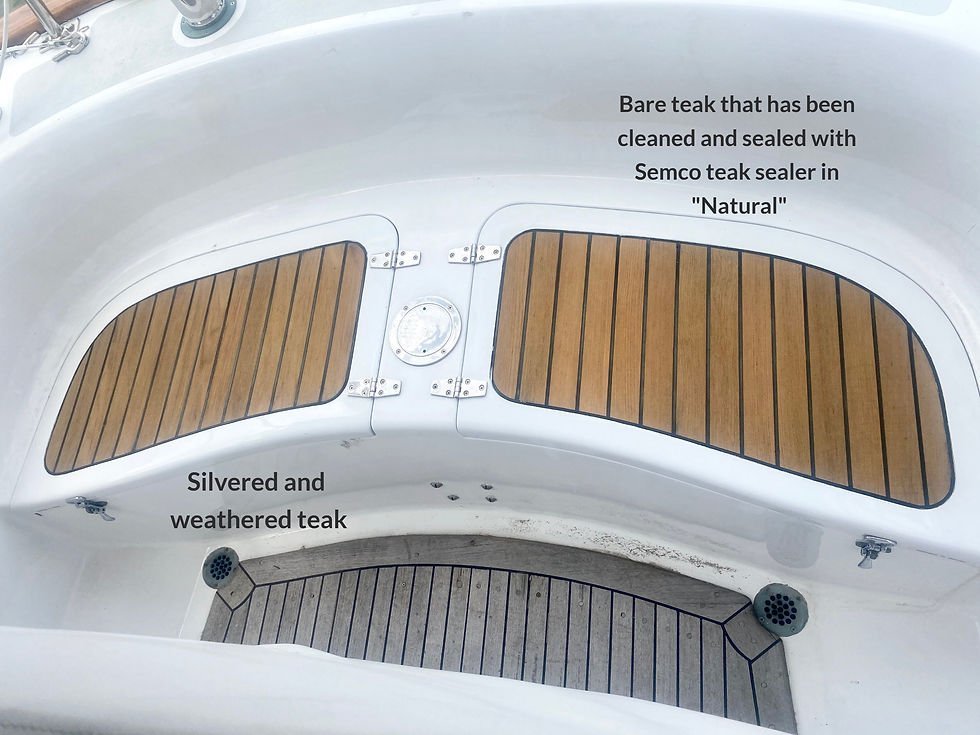
1. Bare Teak (Side Decks, Cockpit Floors)
Bare teak naturally weathers to a soft silver-gray patina. Some owners love this look and prefer the low maintenance, while others prefer the warm golden tones of freshly cleaned teak. One of the biggest downsides of weathered teak is that if it is left untreated entirely, it tends to hold dirt.
Cleaning
Gentle is best: Use mild, pH-balanced soap or a teak cleaner with a soft-bristle brush or Scotch-Brite pad. Always scrub across the grain to avoid gouging the wood.
Avoid harsh methods: Stay away from high-pressure washers, stiff brushes, or aggressive two-part cleaners, as they can erode the softer grain and shorten the life of your teak.
Brightening: If you prefer to restore the golden look, apply a teak brightener after cleaning, rinse thoroughly, and let it dry completely.
Maintaining the Patina
If you like the silvered look, simply clean annually and avoid adding oils or coatings altogether.
For those who want a less weathered/ aged look with more color, a light sanding can help bring back the natural golden hue. Note: every time you sand, you take away material. Exotic woods, like teak, sourced overseas are becoming more difficult to replace, more costly, and more heavily regulated.
Enhancements
Teak Oil: Enhances the grain and color but provides little protection. It needs reapplication every month or so and tends to hold on to dirt, making it wear and age faster. In general, we do not recommend using teak oil.
Teak Sealers: Provide UV protection, help retain fresh color, and typically need recoating once per season. A good option if you want protection without heavy upkeep.

2. Finished Teak (Varnish or Varnish & Stain)
Finished teak is often used on rails, trim, cabin soles, tables, bulkheads, and cabinetry where a durable, glossy appearance is desired. One of the benefits of finished teak is you can reduce maintenance frequency, if the finish is applied and maintained properly.
Cleaning & Inspection
Use mild soap and water or teak-specific cleaners to avoid damaging the finish.
Inspect regularly for cracks, dulling, or UV wear—early touch-ups extend the life of the finish.
UV Protection & Longevity
Single-part teak finishes, like spar varnish (ex. Interlux Schooner Gold or the classic Epifanes Varnish), are relatively easy to apply and touch up. Just follow the instructions and learn the product. The life span of single part varnish finishes varies, especially on exterior teak, but may be as little as 12 months before sanding and fresh coats are needed in higher UV areas like south Florida or the tropics.
Two-part teak finishes, like Awlgrip Awlwood MA, offer longer lasting protection (3-5 years with proper maintenance coats) but are more difficult and less forgiving to apply. They are also expensive.
Alternatives like Sikkens Cetol combine stain and sealer, offering easier application, built-in UV protection, and mildew resistance—though with more of a soft satin look, compared to varnish.
For easier maintenance and a more natural look for bare teak surfaces, products like Semco Teak Sealer are a great choice that offers great protection and keeps teak looking new, but requires more frequent maintenance coats than other products.
As you can see, it's a bit of a "pick your poison" situation when it comes to choosing the right teak coating product. The best product really depends on the aesthetic and investment you want to make.
3. Voices from the Dock
While every boater has their opinions, experienced boaters often agree on at least a few key points:
Trim vs. Decks: Trim benefits from varnish for beauty and UV protection, while decks and cockpit floors are better left bare or sealed and cleaned.
Varnish vs. Sealers: Varnish delivers a show-stopping look but demands the most upkeep. Sealers and Cetol provide good UV resistance with less frequent maintenance.
Oils: Teak oils look great initially but oil requires constant reapplication, offers little to no UV blocking, and tends to attract dirt. Experienced boaters avoid it.
4. Top-Rated Teak Finish Products
Here are some of the most respected products for UV protection, ease of use, and longevity:
TotalBoat Danish Teak Wood Sealer – A deep-saturating sealer that preserves golden color for over a year. Easy wipe-on application and minimal prep for recoating.
Semco Teak Sealer – A favorite among boaters. UV-resistant, easy to apply, and often lasts an entire boating season with just two coats.
Sikkens Cetol Marine – A proven marine finish that combines stain and sealer with strong UV resistance. Easier to maintain than varnish and provides a warm, satin look.
TotalBoat Lust Marine Spar Varnish – A one-part spar varnish with high gloss and excellent UV inhibitors. Quick-drying, so you can apply multiple coats in a day.
Interlux Schooner Gold - a favorite amongst sailors, this is a one-part spar varnish with good UV protection. More coats = more UV protection.
Epifanes Varnish - is the long-time gold standard of varnish, especially for interior projects. Some claim it is finicky and difficult to work with but if you research how to apply it properly, you will have a beautiful, long lasting result.
AwlGrip Awlwood MA - best for use by the pros, this finish can be sprayed or applied by brush with the right thinners and technique. When applied properly, this product offers multi-year protection and can stand up to a lot of abuse.
5. Summary at a Glance
Teak Type | Process & Maintenance | Best Finish Options |
Bare Teak | Gentle cleaning, brighten if desired, optional sanding | Sealers (TotalBoat, Semco) for UV protection; avoid teak oil |
Finished Teak | Clean carefully, inspect and recoat annually | Spar varnish (TotalBoat Lust or Interlux Schooner Gold) for gloss; Sikkens Cetol for simpler upkeep |
Final Thoughts: Caring for Teak on Your Boat
Always start with the mildest cleaning methods first—teak is durable, but aggressive cleaning wears it down faster. Aggressive sanding should be avoided as teak is expensive and can be difficult to replace.
Decide upfront whether you want the natural silver patina, golden bare teak, or a glossy finished look. Changing course later can be labor-intensive.
Finished teak is stunning but requires a maintenance cycle of sanding and recoating.
Sealers strike a nice balance: they preserve teak’s look, offer UV protection, and keep upkeep simple. Many sailors and boaters advocate for this approach because of the simplicity.
Always protect gelcoat and nearby surfaces during application—drips and runs can stain.
With the right care, your teak can look beautiful and last for decades, whether you prefer the timeless weathered look or a glossy, yacht-show finish.


Comments